Bamboo Toothbrush vs. Electric Toothbrush: Which Actually Wins on Cleaning?
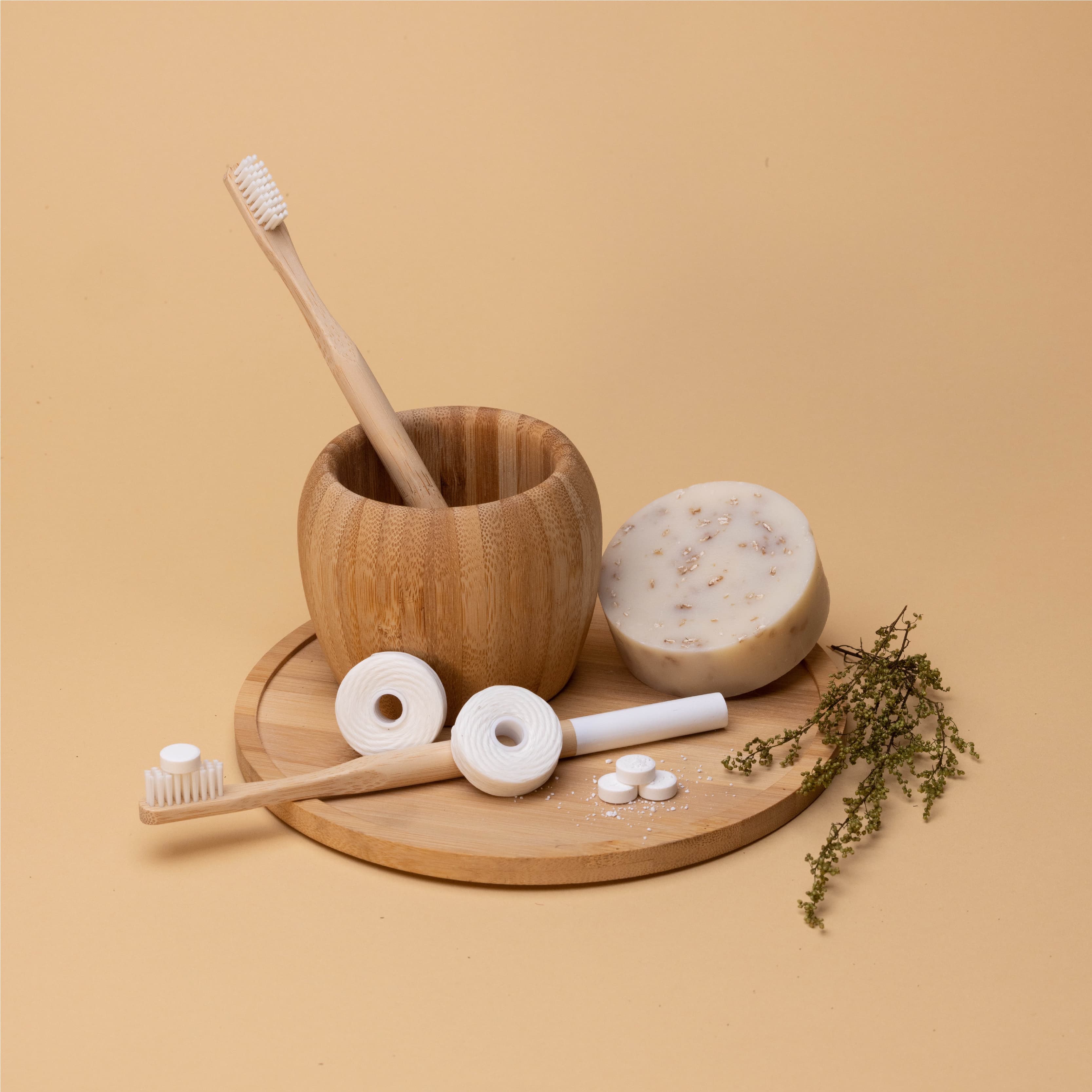
There's a question that comes up constantly from people who are trying to make better choices in the bathroom: if electric toothbrushes are supposed to be the gold standard for clean teeth, what does that mean for bamboo toothbrushes? Are you sacrificing your oral health to save the planet? The short answer is no — but the longer answer is worth understanding before you make a decision either way.
What the Research Actually Says About Electric Toothbrushes
Electric toothbrushes have a genuine edge in the clinical literature. A Cochrane review — one of the most rigorous types of evidence summaries in medicine — found that oscillating-rotating electric toothbrushes reduced plaque by 21% more and gingivitis by 11% more compared to manual toothbrushes over short-term use. That's not nothing. The mechanical action does some of the work your wrist would otherwise have to do, which matters especially for people with limited dexterity, orthodontic appliances, or a tendency to brush too hard.
The ADA recognizes both manual and electric toothbrushes as effective when used correctly. That word — correctly — is doing a lot of lifting in that sentence.
What the Research Says About Manual (Including Bamboo) Toothbrushes
Here's the part that often gets glossed over: the clinical advantage of electric toothbrushes largely disappears when manual brushers use proper technique. Research suggests that two full minutes of brushing, twice a day, with attention to the gumline, produces results that are statistically comparable to electric for most healthy adults.
Most people don't brush for two minutes. Most people don't hit every surface. That's the real gap electric toothbrushes close — they compensate for human laziness and inconsistency, not some fundamental inadequacy of bristles against teeth.
A bamboo toothbrush with quality bristles, held at a 45-degree angle to the gumline and moved in small circular motions, cleans teeth. Effectively. The handle material is irrelevant to plaque removal. Bamboo doesn't scrub your teeth — the bristles do.
The Environmental Math Nobody Talks About
This is where the comparison gets genuinely interesting. Electric toothbrushes are typically marketed as sustainable because you only replace the head, not the whole unit. But the full picture is messier.
The EPA estimates that Americans throw away roughly one billion plastic toothbrushes every year. Most of them are manual, which is why switching to bamboo makes a real dent in that number. But electric toothbrush heads are also plastic, and they need replacing every three months just like manual brushes. The base units contain lithium batteries and mixed plastics that are notoriously difficult to recycle — most municipal programs won't take them.
One 2020 lifecycle analysis published in the British Dental Journal found that electric toothbrushes have a significantly higher carbon footprint than manual toothbrushes over a two-year period, driven largely by electricity consumption and manufacturing complexity. That's a legitimate environmental cost that doesn't show up in the bathroom cabinet.
Bamboo toothbrushes, by contrast, are biodegradable (the handle, at least — nylon bristles typically need to be pulled out and binned separately). The handle can go in a compost pile or green waste bin, which is genuinely rare for something you use twice a day.
Where Electric Toothbrushes Genuinely Pull Ahead
Fairness requires being honest about this. There are specific situations where an electric toothbrush isn't just marginally better — it's the right clinical choice.
If you have periodontal disease, a history of significant gum recession, or your dentist has specifically flagged that your manual technique isn't cutting it, an oscillating-rotating electric brush is worth the investment and the environmental tradeoff. Same goes for people with arthritis or other conditions affecting hand strength and coordination.
Built-in timers on electric toothbrushes are also genuinely useful. Research consistently shows that most people underestimate how long they're brushing. A two-minute timer with 30-second quadrant alerts is a simple behavior nudge that works.
If you go electric, pair it with a responsible disposal plan. Some brands have take-back programs for old handles. Use them.
The Cleaning Variables That Matter More Than the Handle
Whether you're holding bamboo or a rechargeable brush, these factors have a bigger impact on your oral health than the tool itself:
Brushing duration. Two minutes is the floor, not the ceiling. Most adults brush for 45 seconds. That's the actual problem.
Technique. Scrubbing hard in straight lines wears enamel and misses the gumline. Small circles at 45 degrees is the standard recommendation from periodontists for good reason.
Flossing. No toothbrush, bamboo or electric, cleans between teeth. Interdental cleaning is non-negotiable if you care about your gum health, and the ADA is consistent on this point.
Replacement schedule. Worn bristles are less effective regardless of what they're attached to. Three months, or sooner if the bristles are visibly frayed.
Toothpaste. Fluoride toothpaste is the workhorse of cavity prevention. The brush delivers it; the fluoride does the heavy lifting against demineralization.
So Which One Actually Wins?
It depends on who's asking.
If you're a consistent, careful brusher who hits two minutes twice a day and flosses regularly, a bamboo toothbrush will serve your teeth well and cost the planet significantly less. You're not compromising your oral health. You're making a legitimate environmental choice backed by how well you actually use the tool.
If you know you rush, if your dentist keeps flagging plaque in the same spots every visit, or if you have a clinical reason to need more mechanical assistance, an electric toothbrush earns its place. Just go in clear-eyed about the disposal problem and plan for it.
For what it's worth, the reason we built Brush Club around bamboo brushes is because we kept meeting people who were already good brushers and felt like they had to choose between their oral health and their values. You don't. But we'd also be the first to tell you that a bamboo toothbrush used sloppily beats nothing, and an electric toothbrush used correctly beats both.
The most sustainable toothbrush is ultimately the one you'll actually use properly.
A Note on Cost
Electric toothbrushes range from $25 for a basic model to over $200 for a premium one, plus $20 to $40 per year in replacement heads. Bamboo toothbrushes typically run $3 to $6 each, and most people replace them four times a year. Over five years, the cost difference is significant — and not in electric's favor.
For households, hotels, and businesses sourcing dental amenities in volume, that math becomes even more pronounced. The wholesale economics of bamboo tend to make the environmental case even easier to act on.
The Bottom Line
Electric toothbrushes are clinically superior under real-world conditions, because most people don't brush well enough manually to close the gap. Bamboo toothbrushes are environmentally superior, meaningfully so, and can match electric performance when used with intention.
Neither toothbrush is magic. Both require you to actually show up for two minutes, twice a day, and pay attention to what you're doing. The handle is a smaller variable than the habit.
Sources
Related Articles
Ready to Make a Difference?
Start your sustainable oral care journey with our eco-friendly dental kit. Reduce plastic waste while maintaining excellent dental health.